
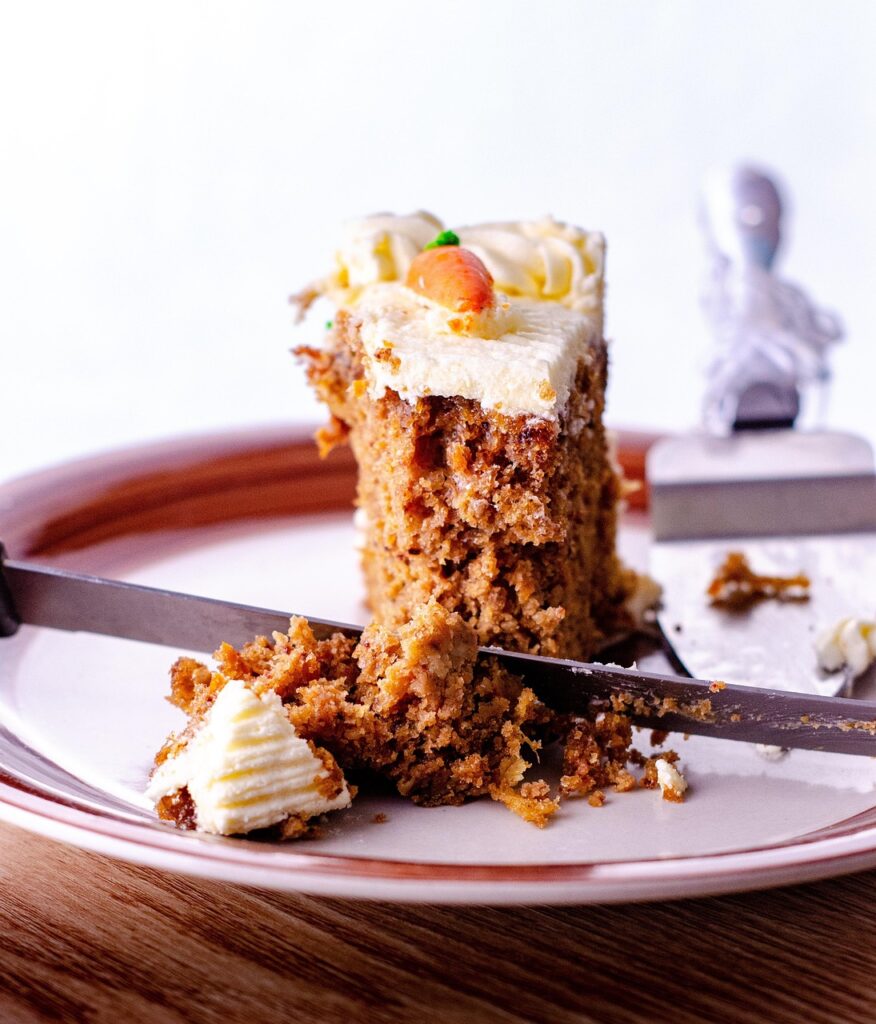
Let’s Bake!
Perhaps understanding the predictability and complexity of a cake structure is one way to comprehend the AI development process. You might never look at a cake the same way again after this analogy. It illustrates why exact predictions remain elusive, despite precise measurements and controls over the ingredients in a cake. So what does that have to do with artificial intelligence (AI), you might wonder. Well, read on to find out!
Baking a Cake
Baking a cake is often perceived as a precise science, where knowing all the ingredients and carefully measuring each component should, in theory, allow us to predict the outcome with certainty. However, the internal structure of a cake—its crumb texture, air pockets, and overall consistency—can vary, even when the recipe is followed precisely. This raises an intriguing question: can we ever accurately predict a cake’s internal structure, or are there factors beyond our control?
The Science Behind Cake Structure
A cake’s internal structure is shaped by several chemical and physical processes that occur during mixing and baking. Ingredients such as flour, eggs, sugar, and fat interact in complex ways. For example, gluten development, egg protein coagulation, and sugar’s role in moisture retention all contribute to the final texture. These processes are influenced by the ratios of ingredients, but also by variables such as mixing technique, oven temperature, humidity, and even altitude.
The Role of Unpredictable Variables
Even with precise measurements, certain factors are difficult to control or predict. The way ingredients are incorporated, the speed and duration of mixing, and small variations in oven heat distribution can all affect the cake’s crumb. Microscopic differences—such as air bubbles trapped during mixing—can lead to changes in how the cake rises and sets. Additionally, the chemical reactions (like Maillard browning and starch gelatinization) may progress differently based on these subtle factors.
Limits of Predictability in Baking
While modern food science can model and estimate the likely outcome of a cake recipe, it cannot guarantee the exact internal structure every time. The system is too complex, with countless interacting variables. Thus, bakers can achieve consistency, but not perfect predictability. This is similar to other complex systems in nature, where knowing all initial conditions does not always allow for exact forecasts due to sensitivity to minor changes.
Analogous Challenges in AI Development
We say that with baking a cake, even though knowing and measuring all ingredients is essential for successful baking, it does not allow for the perfect prediction of a cake’s internal structure. The unpredictable interplay between chemical reactions, physical processes, and environmental factors means that each cake is unique, even under seemingly identical conditions. This unpredictability is part of what makes baking both a science and an art. If this is so for cakes that we have been making for centuries, what about AI development, which we have only been developing over a few decades? The implications and potential consequences are far greater than if your recipe results in you having to serve a sloughed cake!
Limits of Predictability for AI Systems
Just as the structure of a cake is influenced by a multitude of interacting variables—some of which are difficult to control or predict—the development and performance of artificial intelligence (AI) systems share similar complexities. In AI, even with precise algorithms and well-defined data inputs, the internal workings and outcomes of a model are shaped by countless factors, including data quality, model architecture, hyperparameter choices, and subtle environmental influences.
Much like unpredictable air pockets or temperature fluctuations in baking, small variations in training data, random initialization, or hardware performance can lead to different outcomes in AI models, even when the process appears to be strictly controlled. The emergent behaviour of an AI system, analogous to the crumb texture of a cake, is the result of intricate and often non-linear interactions between components. This means that perfect predictability—knowing exactly how an AI will perform on every possible input—remains elusive.
Ultimately, both baking and AI development exemplify complex systems where consistency can be achieved through careful measurement and control, but absolute certainty is unattainable due to inherent unpredictability and sensitivity to minor changes. This “unpredictability” appears to be what makes both fields continually challenging and rewarding, blending scientific rigour with creative problem-solving. But how much of this unpredictability should be unleashed on society?
We don’t need AI for our survival today, but at the current pace of AI development, investments, and lack of understanding, it could potentially reach a point where it dictates our survival — the question is not if, but when!